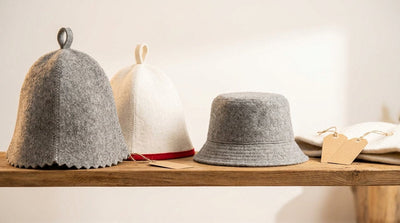
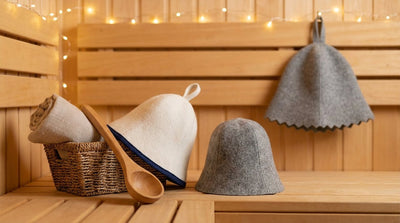
Every tradition has its quiet hero — the object nobody photographs but everybody misses when it's gone. In the steam bath world, that hero is the sauna hat: a thick felted dome of wool that looks a bit like a garden gnome's helmet and works a bit like a thermos for your head. Its story stretches from the smoky village banyas of old Russia to the spotless cedar saunas of Finland, and it's a surprisingly good tale for such a humble piece of felt.
Where It All Began: Felt, Steam, and Necessity
Felt is one of humanity's oldest textiles — older than weaving, by most accounts. Nomadic peoples of the Eurasian steppe were pressing wool into dense, durable fabric thousands of years ago, using it for yurts, boots, saddle blankets, and hats. Felt had two properties that made it precious in harsh climates: it insulated brilliantly, and it did so whether the threat was cold or heat. A felt yurt kept a family warm through a steppe winter and shaded through a scorching summer.
That same logic eventually walked into the bathhouse. The Slavic banya — a wood-fired steam bath — has been documented since at least the medieval chronicles of Kievan Rus', where visitors described locals whipping themselves with birch branches in furious heat and then plunging into icy rivers, apparently for fun. (Some things never change.) In a banya, steam is thrown onto hot stones, and temperatures near the ceiling — right where your head sits on the upper bench — can spike dramatically. Bathers noticed early on that the head suffers first: dizziness, a pounding scalp, hair that felt fried. A thick felt cap, already a familiar object in every household, was the obvious fix.
Nobody can point to the first person who wore one. Like most folk inventions, the banya hat has no patent and no inventor — just centuries of people quietly copying a good idea.
The Banya Hat: A Russian Institution
By the 19th century, the felt cap was simply part of the banya kit, alongside the birch venik (the leafy branch bundle used for that famous whisking massage), a felt mat to sit on, and felt mittens for the person doing the whisking. Felt everywhere, and for the same reason each time: wool holds a pocket of stable air against your skin, buffering it from the extremes around it.
The classic banya hat shape — the tall, slightly pointed bell that makes everyone look like a friendly wizard — isn't just charming. The peak creates an air gap above the crown of the head, adding an extra layer of insulation exactly where the heat is most intense. Form followed function, and the function happened to be adorable.
The banya hat also became a small canvas for humor and identity. Hats embroidered with jokes, nicknames, or mock-military titles ("General of the Steam Room") are a beloved gift tradition in Russia to this day. In a room where everyone is equally red-faced and wearing nothing but a towel, the hat is how you tell people apart.
Meanwhile, in Finland: A Different Philosophy
Here's the honest historical wrinkle: the sauna hat is not originally a Finnish tradition. Finland's sauna culture — recognized by UNESCO as intangible cultural heritage in 2020 — developed its own deep rituals over roughly two thousand years, and for most of that history, Finns bathed bareheaded. The traditional Finnish approach to managing heat was behavioral rather than material: sit lower on the benches, step out to cool off, dip in the lake, repeat.
So how did felt hats end up in Finnish saunas? Mostly through neighborly osmosis. Finland and Russia share a long border and a longer history of cultural exchange, and over the 20th century the felt bathing cap gradually drifted westward. Estonian and Latvian bathhouse traditions — which sit culturally between the two — embraced it warmly. Today you'll find wool sauna hats for sale in Finnish market squares and sauna shops, worn especially by dedicated löyly enthusiasts who like their steam intense and their sessions long. Purists may still raise an eyebrow, but the hat has earned its bench.
Why the Idea Survived Every Era
Fashions in bathing have come and gone — Roman frigidariums, Victorian Turkish baths, 1970s cedar boxes in American basements — but the felt hat keeps reappearing because the underlying physics never changed. If you're curious about the mechanics in detail, we've unpacked them in Why Do People Wear Hats in the Sauna? The Science Explained, but the short version comes down to three things:
- Heat rises. The air at head height in a sauna or banya is meaningfully hotter than at bench level, so your head takes the brunt of every session.
- Wool insulates. Dense felted wool traps air and slows heat transfer, which may help you stay comfortable longer and avoid that dizzy, overcooked feeling — so the heat works on your body, not just your scalp.
- Hair is fragile. Dry sauna heat can leave hair brittle and parched; a hat shields it, much like it shields your ears, which are thin-skinned and quick to sting in high heat.
Note the hedging — a hat is a comfort tool, not a medical device. Research on sauna bathing suggests various wellbeing benefits, but the hat's job is simpler and more certain: it keeps your head cooler than the air around it, which most bathers find lets them relax more deeply. We've rounded up the practical upsides in 7 Real Benefits of Wearing a Wool Sauna Hat.
Banya vs. Sauna: Same Hat, Two Worlds
Though the hat now lives happily in both traditions, the rooms it works in are quite different:
| Russian Banya | Finnish Sauna | |
|---|---|---|
| Typical temperature | 60–90°C (140–194°F) | 70–100°C (158–212°F) |
| Humidity | High — thick, wet steam | Lower, with bursts of löyly steam |
| Signature ritual | Venik (birch branch) massage | Ladling water onto the stones |
| Hat status | Traditional, near-essential | Adopted, increasingly common |
Interestingly, the hat earns its keep in both. In the banya's wet steam, it protects against the scalding surge that follows each ladle of water. In the sauna's drier heat, it guards hair and ears through longer sessions. A well-made wool sauna hat doesn't care which room you take it into — the felt does the same patient work either way.
The Sauna Hat Today
The past couple of decades have carried the sauna hat far beyond its homelands. As sauna culture booms across North America — backyard barrel saunas, urban bathhouses, cold-plunge studios with steam rooms attached — the felt hat has come along as both a practical tool and a badge of the initiated. Wearing one signals, gently, that you know what you're doing in there.
The shapes have diversified, too. The classic pointed bell remains the icon, but brimmed bucket styles have become popular for the extra shade they throw over ears and neck. What hasn't changed is the material: after all these centuries, nothing has outperformed plain, honest, 100% wool felt. Synthetics can melt, trap sweat, or simply fail to insulate; wool breathes, wicks moisture, and shrugs off heat the way it has since the steppe.
One more thing hasn't changed: a felt hat, treated kindly, lasts a very long time. The old banya hats were handed down and patched, not thrown away — and yours can age just as gracefully with a little know-how, which we've laid out in our wool sauna hat care guide.
So the next time you pull on that funny felt dome and catch your reflection — part wizard, part gnome, entirely comfortable — know that you're joining a lineage of steam-lovers stretching back centuries and across a continent. The banya gave the hat its shape, the sauna gave it a second home, and physics keeps it relevant. Not bad for a piece of pressed wool.
Made for the hot room
DIVELUX sauna hats are handmade from 100% natural wool felt — breathable, insulating and built to last. 7 colors, classic and bucket styles, $19.99 with free US shipping.
Shop Sauna Hats →