Step into a sauna for the first time, and you are immediately greeted by a wall of heat. It is a profound, full-body sensation that has drawn humans to sweat bathing for thousands of years. But as you settle onto the wooden bench and glance at the thermometer on the wall, you might wonder: How hot is this room supposed to be? Is hotter always better? And what exactly is that hissing cloud of steam everyone keeps talking about?
The truth is, there is no single "perfect" sauna temperature. The ideal heat depends entirely on the type of sauna you are using, your personal tolerance, and what you are hoping to get out of the experience. Whether you are seeking a gentle, lingering warmth to soothe tired muscles or chasing the intense, skin-tingling rush of a traditional Finnish steam blast, understanding how temperature works is the key to unlocking your best sauna session.
Traditional vs. Infrared: Two Different Heat Languages
Before we dive into the numbers, we have to establish which kind of heat we are talking about. Comparing a traditional wood-fired or electric sauna to an infrared sauna is a bit like comparing a hot cup of tea to a warm summer day—they both warm you up, but the delivery mechanisms are entirely different.
Infrared Saunas use specialized lamps to emit electromagnetic radiation that warms your body directly, rather than heating the air around you. Because the air itself isn't the primary heat vehicle, infrared saunas operate at much lower temperatures. Research suggests that this direct-warming method can penetrate the skin deeply, allowing for a vigorous sweat even in a relatively mild room.
Traditional Saunas (often called Finnish saunas) use an electric heater or a wood-burning stove to heat a pile of rocks. Those rocks then radiate heat into the room, warming the air. This ambient heat eventually warms your body from the outside in. Because air is not a highly efficient conductor of heat, the room itself must be much hotter to trigger a deep sweat response.
| Sauna Type | Average Temperature Range | Humidity Level | Primary Heat Method |
|---|---|---|---|
| Infrared | 120°F – 150°F (49°C – 65°C) | Very Low | Radiant (Heats the body directly) |
| Traditional Dry | 150°F – 195°F (65°C – 90°C) | Low (5% - 15%) | Convection (Heats the air) |
| Traditional Wet | 160°F – 185°F (71°C – 85°C) | Moderate (15% - 30%+) | Convection + Steam (Löyly) |
The Sauna Temperature Tiers
If you are stepping into a traditional sauna, you will generally encounter three distinct temperature zones. Each offers a different experience, and none of them is inherently "better" than the others. It is all about finding what your body responds to best on any given day.
1. The Gentle Warm-Up: 120°F to 150°F (49°C - 65°C)
This is the standard operating range for infrared saunas, but it is considered quite cool for a traditional Finnish sauna. At this temperature, the heat feels like a heavy, warm blanket. It is incredibly inviting and allows for longer, more conversational sessions.
If you are new to sauna bathing, recovering from an illness, or simply looking for a quiet space to meditate without feeling overwhelmed, this is your zone. Your heart rate will still gently elevate, and you will eventually break a sweat, but the physiological stress is minimal. Many people find this lower temperature range may help promote deep relaxation and ease muscle tension without the intense cardiovascular demand of a hotter room.
2. The Finnish Sweet Spot: 150°F to 175°F (65°C - 79°C)
Welcome to the goldilocks zone of traditional saunas. For most regular bathers, this range offers the perfect balance of comfort and intensity. The heat is undeniable the moment you walk in, but it isn't so aggressive that it burns your nostrils when you take a deep breath.
In this range, your body has to work actively to cool itself down. Blood vessels dilate, circulation increases, and the sweat begins to flow freely. Current research suggests that regular, moderate-to-high heat exposure in this range may support cardiovascular health and improve overall vascular function. Because you are sweating profusely here, it is absolutely vital to sweat smart and stay hydrated before, during, and after your session.
3. The Löyly Zone: 175°F to 195°F+ (79°C - 90°C+)
This is where sauna bathing transitions from a casual relaxation exercise into a deeply traditional, sometimes challenging ritual. At temperatures approaching 200°F, the air feels completely different. It is sharp, dry, and commanding.
In the higher temperature tiers, the body's cooling mechanisms are pushed to their limits. The heart pumps faster, mimicking the effects of moderate physical exercise. While experienced sauna enthusiasts often crave this intense heat, it requires respect. Sessions at these temperatures should generally be shorter (typically 10 to 15 minutes), followed by a dedicated cooling-off period.
The Magic of Löyly: Why Humidity Changes Everything
You cannot talk about traditional sauna temperatures without talking about löyly (pronounced "low-loo"). In Finnish, löyly refers to the steam that rises when you ladle water over the heated sauna rocks. But to sauna purists, it is much more than just steam—it is the spirit of the sauna.
When you are sitting in a 180°F room, the air is naturally very dry. Your sweat evaporates quickly, which cools your skin and makes the intense heat tolerable. However, the moment you pour water on the rocks, the humidity in the room spikes. This sudden wave of moisture prevents your sweat from evaporating efficiently.
Even though the actual temperature in the room hasn't increased (in fact, it drops slightly as the water absorbs heat from the rocks to become steam), the perceived temperature skyrockets. The löyly wraps around you like a hot, wet towel. It is an exhilarating rush that forces a profound, cleansing sweat. Mastering the use of water on the rocks allows you to dynamically control the intensity of the heat, regardless of what the thermometer says.
Bench Physics: Why Your Head Needs Protection
If you have ever spent time in a traditional sauna, you know that heat rises. The temperature difference between the floor of a sauna and the ceiling can be as much as 60°F (15°C) to 80°F (26°C). This is why sauna benches are tiered. Sitting on the bottom bench might feel like a mild 140°F, while the top bench is pushing a blistering 190°F.
This vertical heat gradient presents a unique physiological challenge: your head is exposed to the absolute highest temperatures in the room, while your core and legs are experiencing much cooler air. Because the head has a high concentration of blood vessels, overheating it can lead to dizziness, fatigue, and headaches, cutting your session short before your body has fully enjoyed the benefits of the heat.
Furthermore, extreme dry heat—especially combined with waves of löyly—can severely strip moisture from your hair, leaving it brittle, frizzy, and prone to breakage.
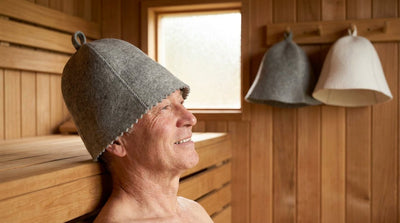
This thermal reality is exactly why experienced bathers consider a proper sauna hat to be an essential piece of gear, not just a novelty. A high-quality wool sauna hat acts as a powerful thermal insulator. Natural wool felt traps a layer of air at your normal body temperature around your head. It prevents the extreme heat of the top bench from penetrating, keeping your head comfortably cool while your body absorbs the heat. It also provides a physical barrier that protects hair follicles from drying out. If you want to dive deeper into the rich history of this practice, you can explore what the sauna hat says about sauna culture.
Finding Your Perfect Temperature
So, how do you find the temperature that is right for you? The best approach is to listen to your body, not your ego. Here are a few expert tips for navigating sauna heat:
- Start Low and Slow: If you are new to the practice, begin on the lower bench in a moderately heated room (around 150°F). Stay for just 5 to 10 minutes.
- Use the Benches: You don't need to touch the thermostat to change the heat. Move up a bench for more intensity, or drop down a tier if you feel overwhelmed.
- Respect the Löyly: Add water to the rocks gradually. A small ladle will create a gentle wave of humidity; dumping a whole bucket will create an unbearable wall of scalding steam.
- Watch for Warning Signs: A good sauna session should feel challenging but euphoric. If you ever feel dizzy, nauseous, or uncomfortably lightheaded, that is your body's strict instruction to exit the room immediately and cool down.
Ultimately, the "perfect" sauna temperature is the one that leaves you feeling refreshed, relaxed, and rejuvenated when you step out the door. Whether you are basking in a gentle 130°F radiant glow or braving a 190°F löyly blast with your trusty wool hat on your head, the journey is entirely yours to shape.
Made for the hot room
DIVELUX sauna hats are handmade from 100% natural wool felt — breathable, insulating and built to last. 7 colors, classic and bucket styles, $19.99 with free US shipping.
Shop Sauna Hats →