Walk into any well-loved sauna and you'll spot them: those charming felt hats perched on relaxed, rosy faces. But not all sauna hats are created equal. Lately, cheaper synthetic versions have been popping up online — polyester felt, acrylic blends, even fleece — promising the same experience for a few dollars less. So does the material actually matter, or is a hat just a hat? Short answer: in a room that regularly hits 175–195°F, the fiber on your head matters quite a lot. Here's the honest breakdown.
First, a Quick Refresher: What a Sauna Hat Is Actually Doing
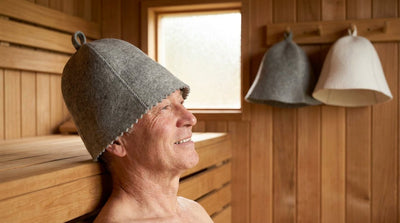
A sauna hat has one job: slow down the transfer of heat to your head. In a sauna, the hottest air collects near the ceiling — right where your head sits, especially on the upper bench. Your scalp and ears heat up faster than the rest of you, which is often what drives people out of the sauna before their body is ready to leave. A good hat acts as insulation, keeping your head noticeably cooler so you can stay in longer and feel more comfortable doing it. (We dig into the physics in Why Do People Wear Hats in the Sauna? The Science Explained if you want the full nerdy version.)
So the real question isn't "hat or no hat" — it's "which material insulates best, breathes best, and survives best in extreme heat and humidity?" That's where wool and synthetics part ways.
Why Wool Is the Traditional Choice (and Still the Best One)
Sauna hats have been made from felted wool for centuries — from the Russian banya to Finnish savusaunas — and that's not just nostalgia. Wool happens to be almost comically well-suited to the job.
Wool traps air, and air is the insulator
Wool fibers have a natural crimp — a zigzag structure that creates millions of tiny air pockets when the fibers are felted together. Still air is one of the best insulators there is, which is why thick wool felt keeps your head cool in a sauna the same way it keeps a shepherd warm on a hillside. Insulation works in both directions: it slows heat moving in just as well as heat moving out.
Wool manages moisture like a champ
Here's the part synthetics genuinely can't copy: wool can absorb up to about 30% of its own weight in moisture vapor before it even feels damp, and it keeps insulating while wet. In a sauna, where your head is sweating and steam is billowing, that matters. The hat wicks moisture away and gradually releases it, so the felt stays dry-feeling and keeps insulating.
Wool is naturally breathable and odor-resistant
Lanolin and the structure of the fiber make wool naturally resistant to bacteria and odor. A wool hat that gets aired out between sessions stays fresh remarkably long. It's also naturally flame-resistant — wool chars rather than melts, which is a comforting property for something you wear inches from a 195°F ceiling.
What Happens to Synthetics in a Sauna
Polyester, acrylic, and fleece hats look similar in product photos. On your head at 185°F, the differences show up fast.
- They insulate worse when damp. Synthetic fibers are smooth plastic filaments — no crimp, no moisture absorption. Once the hat is soaked with sweat and steam, that wet layer conducts heat toward your scalp instead of blocking it. The hat can end up feeling like a warm, clammy compress.
- They don't breathe. Instead of vapor passing through the fiber itself, sweat sits against your skin or pools in the fabric. Many people find synthetic hats feel sticky and stuffy within minutes.
- Heat is unkind to plastic. Polyester softens around 480°F and acrylic even lower — you won't melt a hat in a normal sauna, but repeated exposure to high heat can degrade synthetic fibers, and some people are understandably wary of warmed plastic sitting against their skin session after session. Wool sidesteps the question entirely.
- They hold onto smells. Synthetics are notorious for retaining body odor (ask anyone who owns polyester gym shirts). A sauna hat lives in a warm, sweaty environment — the worst-case scenario for stink-prone fabric.
To be fair, synthetics have real virtues elsewhere: they're cheap to produce, quick-drying on a clothesline, and machine-washable without fuss. If you sauna twice a year, a synthetic hat won't ruin your life. But if the sauna is part of your routine, the material difference is one you'll feel on your head every single session.
Wool vs Synthetic at a Glance
| Property | Wool Felt | Synthetic (Polyester/Acrylic) |
|---|---|---|
| Insulation when dry | Excellent | Decent |
| Insulation when damp | Stays effective | Drops noticeably |
| Breathability | High — fiber absorbs and releases vapor | Low — moisture sits on the surface |
| Behavior in extreme heat | Naturally heat- and flame-resistant | Plastic fibers soften and degrade over time |
| Odor resistance | Naturally antibacterial | Prone to holding smells |
| Feel on skin | Soft, dry, cushioned | Often clammy when sweaty |
| Longevity with care | Years of regular use | Varies; heat shortens lifespan |
The Hair Question
One of the most common reasons people reach for a sauna hat in the first place is hair protection. Dry sauna heat may strip moisture from hair, leaving it brittle and frizzy — colored and chemically treated hair is especially vulnerable. A thick wool hat keeps your hair in a cooler, more humid microclimate, and because wool handles moisture gracefully, your hair isn't marinating in a sweat-soaked plastic pouch. Synthetics technically cover your hair too, but a hot, non-breathing hat pressed against a sweaty scalp is not exactly a spa treatment. If hair care is your main motivation, wool is the clear pick — it's benefit number three in our rundown of 7 real benefits of wearing a wool sauna hat.
What About Durability and Care?
This is where synthetics score their one honest point: you can toss most of them in the washing machine. Wool asks for slightly more thoughtful treatment — hand washing in cool water, air drying, no wringing. In practice, though, a wool sauna hat rarely needs a full wash. Airing it out after each session and an occasional gentle rinse is usually plenty, thanks to wool's natural odor resistance. We've written a full guide on how to wash and care for a wool sauna hat, and the honest summary is: five minutes of care a few times a year, and the hat outlasts several synthetic replacements.
How to Spot a Quality Wool Hat
If you've decided wool is the way to go — good instinct — here's what separates a great hat from a mediocre one:
- 100% wool, not a blend. "Wool blend" often means mostly polyester with a sprinkle of wool for the label. Check the fiber content, not just the product name.
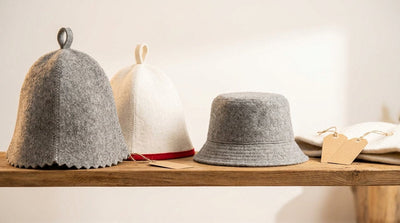
- Thick, dense felt. Insulation comes from trapped air, and trapped air comes from thickness. A quality felt hat should feel substantial and hold its shape on its own, like a proper wool sauna hat rather than a floppy craft-store piece.
- Coverage that matters. The hat should come down over your ears and forehead — the areas that feel sauna heat first. Classic bell shapes and brimmed bucket styles both do this well; the choice is mostly about personal style.
- Handmade construction. Hand-felted hats tend to have more even density, which means more consistent insulation with no thin spots.
The Bottom Line
Sauna culture figured this one out generations ago: wool isn't the traditional sauna hat material because our banya-going ancestors lacked options — it's because centuries of very sweaty trial and error kept landing on the same answer. Wool insulates better, breathes better, handles moisture better, and shrugs off heat that slowly ruins plastic fibers. Synthetics win on price and laundry convenience, and that's about where their advantages end. If the sauna is a place you return to — for the ritual, the calm, the glow afterward — your head deserves the material that was made for the job. Sheep have been beta-testing it for about ten thousand years, and the reviews are excellent.
Made for the hot room
DIVELUX sauna hats are handmade from 100% natural wool felt — breathable, insulating and built to last. 7 colors, classic and bucket styles, $19.99 with free US shipping.
Shop Sauna Hats →