Ask a Finn and a Russian to describe "a proper steam," and you'll get two passionate, slightly incompatible answers. The Finnish sauna and the Russian banya are cousins — both are hot rooms where people go to sweat, relax, and emerge feeling reborn — but they differ in temperature, humidity, rituals, and even the accessories you bring through the door. If you've ever wondered whether a banya is just a sauna with a Russian accent, the honest answer is: not quite. Here's what actually separates them.
The Short Version
A traditional Finnish sauna runs hotter and drier: typically 170–200°F (75–95°C) with humidity often in the 5–20% range, rising briefly when you ladle water over the stones. A Russian banya runs cooler but far more humid: usually 130–160°F (55–70°C) with humidity that can climb to 60% or more, thanks to generous, frequent bursts of steam from a massive enclosed stove. That humidity is the whole game — wet air transfers heat to your skin much more efficiently than dry air, so a 140°F banya can feel every bit as intense as a 190°F sauna, sometimes more so.
| Finnish Sauna | Russian Banya | |
|---|---|---|
| Typical temperature | 170–200°F (75–95°C) | 130–160°F (55–70°C) |
| Humidity | Low to moderate (5–20%) | High (often 40–70%) |
| Heat source | Open stove with exposed stones | Massive enclosed stove (pech) holding intense heat |
| Signature ritual | Löyly — ladling water for waves of steam | Venik — massage with leafy birch or oak branches |
| Vibe | Quiet, meditative, often silent | Social, lively, sometimes downright theatrical |
| Headwear | Optional (but smart) | Practically mandatory — the felt hat is iconic |
The Finnish Sauna: Dry Heat and Quiet Minds
Finland has roughly three million saunas for five and a half million people, which tells you everything about how central it is to daily life. The classic setup is a wood-paneled room with a stove — wood-burning in the countryside, electric in cities — topped with stones. You sit, you sweat, and periodically someone ladles water onto the stones to release löyly, a wave of steam that briefly spikes the humidity and washes over you like a warm tide.
Between those löyly moments, the air stays relatively dry, which is what lets Finnish saunas run so hot without becoming unbearable. The culture is famously understated: conversation is welcome but hushed, and many Finns treat the sauna as something close to meditation. Sessions are typically short — 10 to 15 minutes — followed by cooling off and repeating. If you're not sure how to pace yourself, our guide on how long to stay in the sauna breaks it down round by round.
The Russian Banya: Steam, Ritual, and the Venik
Step into a banya and the first thing you notice is the air itself — thick, soft, and heavy with moisture. The heart of the banya is the pech, a huge stove (traditionally brick) that holds an enormous mass of superheated stones behind a door. When the banschik — the steam master — throws water in, the stones flash it into a dense, fine steam that fills the room. Because the stones stay hidden and extremely hot, the steam is lighter and less scalding than what you'd get from an open stove at the same intensity.
Then there's the venik: a bundle of leafy birch or oak branches, soaked until supple, used to rhythmically pat, brush, and swat the body. It looks alarming to newcomers and feels wonderful — part massage, part heat treatment, part aromatherapy, as the leaves release their oils into the steam. Traditionally, venik treatment is something friends do for each other, which points to the banya's biggest cultural difference: it's social. People talk, laugh, share food and tea between rounds, and treat the whole visit — often two or three hours — as an event, not an errand.
Why Everyone in a Banya Wears a Funny Hat
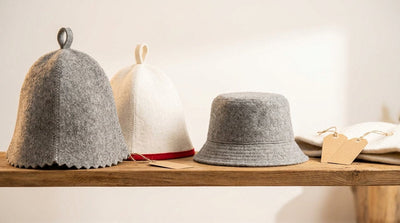
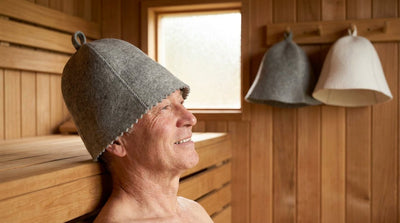
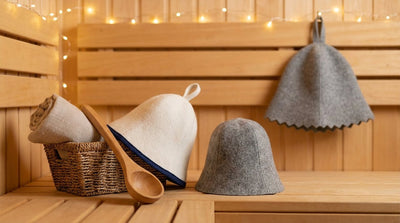
If you've seen photos of a banya, you've seen them: felt hats that look like something between a bell and a garden gnome's helmet. They're not a costume — they're equipment. In a hot, humid room, your head is the first thing to overheat, and wool felt is a remarkable insulator. A wool sauna hat keeps your head noticeably cooler than the surrounding air, which lets you stay in longer and enjoy the heat rather than endure it. It also shields your hair and scalp from the drying effects of high temperatures — a real consideration, as we cover in our article on sauna and hair health. Russians figured this out centuries ago; Finns increasingly borrow the habit, because physics doesn't care about borders.
How the Heat Feels — and What It May Do
Because humid air conducts heat so effectively, banya heat tends to feel enveloping and intense even at lower temperatures, and you'll typically sweat sooner. Dry sauna heat feels sharper on the skin but often easier to breathe in, especially for people who find thick steam claustrophobic.
As for health effects, both traditions make big claims, and the honest framing is that research is encouraging but not conclusive. Studies — notably long-running Finnish research on frequent sauna use — suggest regular heat bathing may be associated with cardiovascular benefits, better sleep, and reduced stress. Steam-heavy environments like the banya may feel soothing for congestion and skin. But "may" is the operative word: heat bathing is a wellness practice, not a treatment, and anyone with heart conditions, blood pressure issues, or a pregnancy should talk to a doctor first. Whichever room you choose, hydrate well and listen to your body over any timer.
So Which One Is for You?
- Choose the sauna if you want intense, clean, dry heat, a quiet and meditative atmosphere, and shorter, simpler sessions.
- Choose the banya if you love steam, ritual, and company — and you're curious enough to let a friend wallop you with birch branches (you'll thank them).
- Honestly? Try both. Many devoted heat-bathers alternate, and most American bathhouses now offer some hybrid of the two.
Whichever door you walk through, the fundamentals travel with you: pace yourself, cool down between rounds, respect the local customs (our sauna etiquette guide covers the unwritten rules), and protect your head. The banya and the sauna have argued for centuries about temperature and humidity — but on the wisdom of a good felt hat, the steam world is in complete agreement.
Made for the hot room
DIVELUX sauna hats are handmade from 100% natural wool felt — breathable, insulating and built to last. 7 colors, classic and bucket styles, $19.99 with free US shipping.
Shop Sauna Hats →