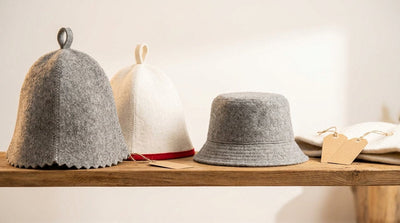
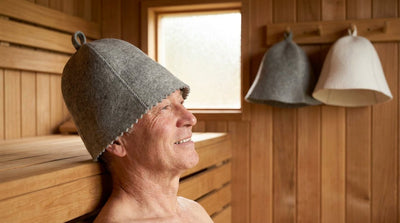
Sauna people know the drill: before the heat, on goes the wool hat. But what about the hot tub — that other beloved warm-water ritual, bubbling away on decks and patios across the country? Do you need a hat there too, or would you just look charmingly overdressed? The honest answer is "it depends on where your hot tub is and what the sky is doing above it." Let's walk through the physics, the edge cases, and the moments when a humble felt hat earns its place tubside.
The short answer
In a typical indoor or mild-weather hot tub session, no — you don't need a hat the way you arguably do in a 190°F sauna. Hot tub water sits around 100–104°F, and the air above it is usually far cooler than sauna air, so your head isn't taking the same thermal beating.
But there are three very real scenarios where a hat goes from "quirky accessory" to "genuinely smart": steamy enclosed tubs, sunny daytime soaks, and — the big one — outdoor winter hot-tubbing, where your body is toasty and your head is freezing. If any of those sound like your setup, keep reading.
Hot tub vs. sauna: why the physics are different
A wool sauna hat exists because sauna air is dramatically hotter than your body — often 160–200°F — and heat rises, so your head sits in the hottest layer of the room. Wool felt insulates, slowing how fast that heat reaches your scalp, which may help you stay comfortable longer and keeps your hair from drying out. (We took an evidence-minded look at this in Do Sauna Hats Really Work? if you want the deeper dive.)
A hot tub flips the equation. The heat source is the water your body is immersed in, not the air around your head. Here's the comparison at a glance:
| Sauna | Hot tub | |
|---|---|---|
| Heat source | Hot air (160–200°F), hottest at head level | Hot water (100–104°F) around your body |
| Air at head height | Very hot and dry (or steamy after a water pour) | Ambient — could be 90°F or 10°F |
| Main job of a hat | Insulate your head from heat | Depends: block steam, block sun, or keep warmth in |
Notice that last row. Wool insulation works in both directions — it slows heat moving in and heat escaping out. That's the key to everything below.
When a hat genuinely helps in a hot tub
1. The winter soak: keeping warmth in
This is the strongest case. Outdoor hot tubs in cold climates create a wonderful, slightly absurd situation: your body floats in 102°F bliss while your head sits in 20°F air, possibly with snow landing on it. Your body loses a meaningful amount of heat through any exposed skin, and when your wet head is the only thing above water on a windy January night, you'll feel it — cold ears, chilled scalp, and that creeping urge to end the soak early.
A wool hat solves this beautifully. It traps warmth, blocks wind, and lets you stay out watching the stars long after a bare-headed soaker would have retreated inside. Cold-country hot-tubbers and outdoor-bath cultures figured this out ages ago — the same felt hats worn in the Russian banya (which, by the way, have wonderfully colorful names) show up around outdoor plunge tubs for exactly this reason.
2. The steamy enclosed tub
Hot tubs in gazebos, sunrooms, or covered enclosures can build up a surprising amount of trapped steam. It's nowhere near sauna intensity, but a long session in a steam-heavy space can leave your face flushed and your head feeling swimmy. A wool hat's insulation may take the edge off, the same way it does in a steam-forward banya. If you tend to feel lightheaded, though, a hat isn't a fix — that's your cue to cool down, hydrate, and shorten the session. (The same overdoing-it instinct trips up sauna newcomers too; we covered it in 7 Sauna Mistakes Beginners Make.)
3. The sunny daytime soak
A midday hot tub session is really two heat sources at once: the water below and the sun above. Direct sun on your head and face adds to your overall heat load and can push a pleasant soak toward the sweaty-and-squinting zone. A brimmed hat shades your face, ears, and neck, keeps glare out of your eyes, and covers your scalp — worth remembering if your part line or thinning spots tend to burn. A hat shades; it isn't sunscreen, so keep using SPF on exposed skin.
What about your hair?
Sauna heat dries hair out; hot tub water does something different — chlorine and bromine can strip natural oils and rough up the cuticle, especially if you dunk. A hat won't help hair that's underwater, but it does help the hair that isn't: it keeps splashes and rising steam off your head, and simply having it on makes you far less likely to absentmindedly dunk. Many soakers pair a hat with a quick pre-soak rinse in fresh water, which may reduce how much treated water your hair absorbs. Long hair tucked up into a roomy felt hat stays dry, contained, and out of the jets.
What kind of hat works best?
Not every hat is suited to a humid, splashy, hot-then-cold environment:
- Wool felt is the classic for a reason: it insulates even when damp, breathes well, resists odor naturally, and shrugs off steam. A traditional wool sauna hat does double duty — it works in the sauna at 180°F and around the hot tub at 18°F, which is a nice trick for one hat to pull off.
- Brimmed wool styles (bucket shapes) add sun and drip protection, making them the better pick for daytime or snowy soaks.
- Cotton beanies soak up moisture and turn into a cold, soggy compress. Skip them.
- Synthetic caps can trap sweat against your scalp and get clammy fast.
- Straw sun hats are fine for shade but hate humidity and offer zero warmth.
Quick tips for hat-wearing hot-tubbers
- Winter soakers: put the hat on before you get in. Starting with a warm, dry head beats trying to rescue a cold one.
- Keep it above the waterline. Wool handles steam and splashes happily, but a full dunk means a slow air-dry afterward.
- Let it dry naturally between soaks. Hang it somewhere airy — never on a radiator, which can shrink and stiffen felt.
- Hydrate anyway. A hat changes your comfort, not your body's fluid loss. You're still sweating in there, even underwater.
- Listen to your body. Dizziness, nausea, or a racing heart mean it's time to get out and cool off — hat or no hat.
So: need? Rarely. Want, once you've spent a February evening in an outdoor tub with warm ears and dry hair while the snow falls? Almost certainly. If your hot tub lives under open sky, a good felt hat might be the cheapest upgrade to your soaking routine you'll ever make — and it'll be ready for the sauna too.
Made for the hot room
DIVELUX sauna hats are handmade from 100% natural wool felt — breathable, insulating and built to last. 7 colors, classic and bucket styles, $19.99 with free US shipping.
Shop Sauna Hats →