Ask ten sauna lovers when the best time to sweat is, and you'll get eleven opinions — usually delivered mid-löyly, with great confidence. The truth is friendlier than the debate: morning and evening saunas are both wonderful, but they do genuinely different things for your body and your day. One wakes you up like a warm-blooded alarm clock; the other unwinds you like a hot, cedar-scented lullaby. Here's how to pick your moment — and how to make either session feel its best.
What Time of Day Actually Changes
Your body isn't the same machine at 7 a.m. as it is at 9 p.m. Core temperature, alertness, and stress hormones all follow a daily rhythm: cortisol tends to peak in the morning, body temperature drifts upward through the day, and in the evening your system starts cooling down as a cue for sleep. A sauna session interacts with all of that.
Heat raises your heart rate, opens up blood flow to the skin, and triggers a lovely wave of relaxation once you cool off. Research suggests the timing of that heat-and-cool cycle may influence how you feel afterward — energized if it aligns with your body's "ramp up" phase, sleepy if it aligns with the wind-down. Neither is better in the abstract. It depends entirely on what you want the sauna to do for you.
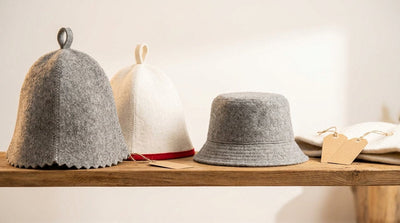
The short version: the hottest air in any sauna sits at head height. A thick 100% wool sauna hat insulates your head and hair so you can stay on the bench longer — DIVELUX hats are handmade wool felt, $19.99 with free US shipping.
The Case for a Morning Sauna
A morning session is the espresso shot of the sauna world — minus the jitters.
Why mornings work
- A gentle jump-start. Heat gets your circulation moving and your heart rate up, a bit like light cardio you do sitting down. Many people find it clears the morning fog faster than a second coffee.
- Mood momentum. That post-sauna calm-but-alert feeling can set the tone for the whole day. Some research suggests regular sauna use may support mood and stress resilience — and starting the day relaxed is rarely a bad strategy.
- You'll actually do it. Habits scheduled in the morning tend to survive busy evenings, dinner plans, and the gravitational pull of the couch.
- A quieter sauna. If you use a gym or public sauna, mornings are often blissfully empty.
Morning caveats
- You're usually mildly dehydrated after a night's sleep, so drink water before you step in, not just after.
- Keep it shorter — 10 to 15 minutes is plenty. A marathon session before work can leave you drowsy instead of sharp.
- Finish with a cool (not necessarily arctic) rinse. The cool-down is what flips the switch from "relaxed" to "awake."
The Case for an Evening Sauna
If mornings are espresso, evenings are chamomile — and this is the timing most of sauna tradition was built around. In Finland, the sauna has long been the ritual that ends the working day, not the one that starts it.
Why evenings work
- Better wind-down, possibly better sleep. Here's the elegant trick: a hot sauna warms you up, and then your body cools down afterward — and that post-heat temperature drop mimics the natural cooling that signals bedtime. Research suggests passive heating in the evening may help some people fall asleep faster, provided you leave a buffer of roughly one to two hours before bed.
- Muscle relief when you need it. After a workout or a long day hunched at a desk, heat can ease that stiff, coiled-spring feeling in your shoulders and back.
- A hard stop for your brain. No phones, no inbox, just heat and breathing. An evening sauna is one of the few remaining places where doing nothing is the entire point.
- Room for ritual. Evenings invite the slow version: multiple rounds, a proper cool-down, maybe a few drops of eucalyptus or birch on the rocks — our sauna aromatherapy guide covers how to do scents safely.
Evening caveats
- Too close to bedtime, and you may climb into bed still flushed and buzzing. Give yourself that cool-down window.
- Skip the sauna-then-nightcap combo. Alcohol and heat are a famously bad duo — dehydration on top of dehydration.
- Rehydrate generously; you'll be sleeping for eight hours without a water bottle in hand.
Morning vs Evening at a Glance
| Factor | Morning Sauna | Evening Sauna |
|---|---|---|
| Main effect | Wakes you up, energizes | Unwinds you, may support sleep |
| Ideal length | Shorter (10–15 min) | Longer, multiple rounds if you like |
| Cool-down | Cool rinse to sharpen alertness | Gentle cooling, 1–2 hours before bed |
| Best for | Habit-builders, slow starters, quiet-sauna seekers | Sore muscles, stress relief, sleep strugglers |
| Watch out for | Overnight dehydration, oversitting | Sessions too close to bedtime, alcohol |
Either Way, Protect Your Head
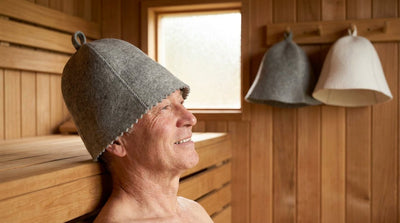
Here's the part that doesn't change with the clock: heat rises, and in a sauna the hottest air pools exactly where your head is. That's why your scalp and ears often feel done long before the rest of you — and why saunagoers in Russia and Finland have worn felt hats for generations. A wool sauna hat insulates your head against that top-shelf heat, so you can stay in comfortably for your full session instead of tapping out early with a hot forehead. It also shields your hair from drying out — a real perk whether you're styling it for the office at 8 a.m. or trying not to wake up with sauna hair.
Wool works morning and night because it isn't about warming or cooling you — it's a buffer that keeps your head closer to a comfortable middle while the room does its extremes. (Curious about the hat's surprisingly rich backstory? We wrote about what the Russian sauna hat is called, and the lore runs deeper than you'd guess.)
How to Choose: Three Honest Questions
- What's the goal? Energy and focus point to morning. Recovery, stress relief, and sleep point to evening. If the answer is "both," congratulations — you're a candidate for alternating.
- When will you actually show up? The best sauna time is the one that survives your real schedule. A consistent evening habit beats an aspirational morning one every time.
- How does your body respond? Some people leave a morning sauna ready to conquer spreadsheets; others need a nap. Try each timing for a week and trust the data your own body gives you over anyone's rulebook — including this one.
The Sensible Fine Print
Whatever the hour: hydrate before and after, start with shorter sessions if you're new, and step out the moment you feel dizzy or unwell — the sauna rewards patience, not endurance. If you're pregnant, have a heart condition, or take medications that affect blood pressure, check with your doctor before making sauna a habit. And if your post-sauna skin is looking suspiciously radiant, that's normal — we explain the sweat-and-glow science in our guide to what the sauna does to your skin.
Morning or evening, the heat is happy to see you. Pick the time that fits your life, keep your head cool while everything else warms up, and let the sauna do what it's done for centuries: make the day — whichever end of it — a little better.
Made for the hot room
DIVELUX sauna hats are handmade from 100% natural wool felt — breathable, insulating and built to last. 7 colors, classic and bucket styles, $19.99 with free US shipping.
Shop Sauna Hats →