Step out of a good sauna session and catch yourself in the mirror: flushed cheeks, dewy skin, that unmistakable just-baked glow. It's not your imagination, and it's not magic either — it's physiology doing something rather lovely. Here's what heat and sweat actually do to your skin, which claims deserve a raised eyebrow, and how to care for your face (and hair) before, during and after the hot room.
The first five minutes: your skin wakes up
The moment you sit down on the bench, your body starts working to shed heat. Blood vessels near the surface of your skin dilate — a process called vasodilation — and blood flow to the skin increases dramatically. That's the flush you see. Along with the blood comes warmth, oxygen and nutrients, which is a big part of why post-sauna skin looks so alive.
Within a few minutes, your roughly two to four million sweat glands get the memo and open the floodgates. A single sauna session can produce anywhere from a cup to well over a liter of sweat, depending on the heat, the humidity and how acclimated you are. Regular sauna-goers actually become better sweaters over time — their bodies learn to start sweating sooner and more efficiently.
What sweat is (and what it isn't)
Sweat is about 99% water. The rest is a modest cocktail of sodium, chloride, potassium, tiny amounts of urea and lactate, and trace minerals. Which brings us to the elephant in the steam room:
The "sweating out toxins" myth
You'll hear it everywhere, but the science is underwhelming. Your liver and kidneys handle the overwhelming majority of detoxification; the amounts of heavy metals or other compounds measurable in sweat are tiny. Sweating is your cooling system, not your filtration system. That doesn't make sauna sweat worthless — far from it — it just means the benefits lie elsewhere.
What sweat may actually do for your skin
- A gentle flush for your pores. Sweat moving outward can help carry loose debris, excess sebum and dead cells to the surface, where they're easy to rinse away. (Pores don't "open" and "close" like doors, but softened skin does release gunk more willingly.)
- Natural moisturizing factors. Sweat contains urea and lactate, both of which are humectants — ingredients skincare brands happily bottle and sell back to you.
- A possible microbiome assist. Sweat contains dermcidin, a natural antimicrobial peptide. Research suggests it may play a role in keeping certain skin bacteria in check, though scientists are still mapping exactly how much this matters.
The glow, explained honestly
That post-sauna radiance is a stack of short-term effects: increased circulation bringing color to the surface, a thin film of sweat and light hydration plumping the outermost skin layer, and softened dead skin cells scattering light more evenly. Some research also suggests that regular sauna use may support skin hydration and barrier function over time, and heat exposure appears to nudge collagen-related repair processes — though "appears to" and "may" are doing honest work in that sentence. Sauna is a wonderful skin ritual; it is not a facelift, and anyone promising otherwise is selling something.
A quick word for different skin types
- Dry or mature skin: the heat and post-rinse hydration can feel fantastic, but moisturize promptly afterward — evaporating sweat can leave skin feeling tight.
- Oily or breakout-prone skin: the sweat-flush can help, but only if you rinse. Sweat left to dry on skin, mixed with sebum, is a recipe for clogged pores.
- Rosacea or very reactive skin: heat is a common flare trigger. Shorter, milder sessions — or a lower bench — may be wiser, and it's worth checking with a dermatologist.
- Eczema and psoriasis: some people report relief, others find sweat stings irritated patches. Let your own skin cast the deciding vote.
Don't forget the skin above your eyebrows
Here's the part many sauna newcomers miss: while the skin on your body is enjoying all that circulation, your scalp and hair are having a harder time. Hair has no sweat glands of its own and no way to cool itself, so in a 180°F room it simply bakes — losing moisture, roughing up the cuticle and, over repeat sessions, turning brittle and dull. Your scalp, sitting at the hottest point in the room (heat rises, and your head is closest to the ceiling), takes the brunt of it.
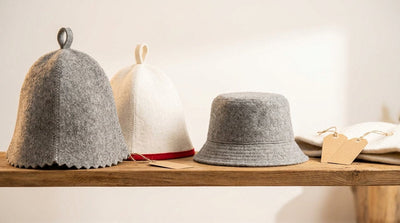
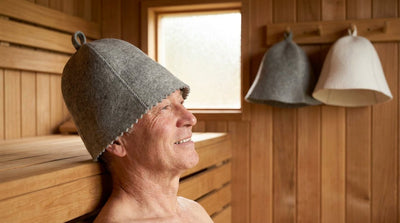
This is exactly the problem a traditional wool sauna hat was invented to solve. Wool felt is a superb insulator: it slows heat transfer to your head and traps a layer of cooler, humid air around your hair, so your body can enjoy a longer, more comfortable session while your hair stays protected. If that sounds too folksy to be true, we've dug into the actual physics in our honest look at whether sauna hats really work — spoiler: the thermodynamics hold up, and bathers across Russia and Finland have been relying on it for centuries.
Aftercare: the ten minutes that decide your glow
What you do right after the sauna matters as much as the session itself. A simple sequence:
- Cool down gradually. Sit for a few minutes and let the sweating taper off before you shower — your body is still actively cooling.
- Rinse with lukewarm water. Wash off sweat, salt and anything it carried out. Hot water right after heat can leave skin feeling stripped.
- Cleanse gently, if at all. A mild cleanser is plenty. Skip harsh scrubs — your skin is warm, soft and more easily irritated than usual.
- Moisturize while damp. Pat mostly dry, then apply moisturizer within a few minutes to trap water in the skin. Humectant ingredients like glycerin or hyaluronic acid earn their keep here.
- Rehydrate from the inside. Drink water steadily over the next hour; a pinch of electrolytes is sensible after a long or repeated session.
- Sunscreen if you're heading outside. Freshly warmed, lightly exfoliated skin deserves protection.
What to skip right after
- Strong actives — retinoids, exfoliating acids and vitamin C can sting on heat-flushed skin. Give it a few hours.
- Heavy makeup immediately after — let your skin finish sweating and cooling first.
- Alcohol — it compounds dehydration, which is the opposite of what your skin just asked for.
Make it a ritual, not a race
The skin benefits of sauna seem to come from consistency, not heroics — several comfortable sessions a week beat one punishing marathon. Build a little ceremony around it: a hat for your hair, a rinse and moisturizer after, maybe a few drops of eucalyptus or birch on the stones if your sauna allows it (we've covered how to do that safely in our sauna aromatherapy guide). Your skin will tell you, in its own glowing way, that it approves.
Made for the hot room
DIVELUX sauna hats are handmade from 100% natural wool felt — breathable, insulating and built to last. 7 colors, classic and bucket styles, $19.99 with free US shipping.
Shop Sauna Hats →