There's a reason the post-sauna feeling has its own vocabulary in every bathing culture on earth: that heavy-limbed, quiet-headed calm that follows a good sweat. Finns call the mood after sauna saunanjälkeinen rauha — the peace after sauna. And it turns out that peace isn't just poetic. Research suggests that warming your body in the evening, then letting it cool, may be one of the more pleasant ways to nudge yourself toward deeper, faster sleep. Here's how the science works, how to time it, and how to build an evening sauna ritual you'll actually stick with.
The warm-up, cool-down trick your body already knows
Your body runs on a roughly 24-hour temperature rhythm. Core temperature peaks in the late afternoon, then begins a slow decline in the evening — and that decline is one of the signals your brain reads as "time to sleep." Sleep researchers have found that people tend to fall asleep fastest when core temperature is actively dropping, not when it's simply low.
This is where evening heat gets interesting. A sauna session raises your core and skin temperature. When you step out, your blood vessels stay dilated, heat pours out through your skin (especially hands and feet), and your core temperature doesn't just return to baseline — it often dips slightly below it. In effect, you've exaggerated the natural evening cool-down. Studies on warm baths and showers before bed — the closest well-studied cousin of evening sauna — suggest this "warm bath effect" may shorten the time it takes to fall asleep and improve sleep quality. A sauna delivers a stronger version of the same warming stimulus, and small studies on sauna bathers report similar improvements in perceived sleep.
The honest caveat: sleep science is messy, individual responses vary, and most sauna-specific studies are small. But the underlying mechanism — heat up, cool down, drift off — is one of the better-supported ideas in sleep research.
Timing is most of the game
The cool-down is what matters, so you need to leave time for it. Step straight from the hot room into bed and you'll likely feel too warm, too stimulated, and a little cheated.
- 1 to 2 hours before bed is the sweet spot most research on pre-sleep warming points to. You finish your sauna, cool off gradually, and your core temperature is on its downward slide right as your head hits the pillow.
- Less than an hour before bed can work for some people, but many find their heart rate is still elevated and they feel alert rather than sleepy.
- Earlier in the evening (say, right after work) is still worthwhile — you get the relaxation benefits, just less of the temperature-timing effect.
Beyond temperature: why sauna calms the mind
The thermal mechanics are only half the story. An evening sauna also works on your nervous system and your habits.
The nervous system shift
During the heat, your sympathetic ("go") nervous system is active — heart rate climbs, you sweat, you feel alert. Afterward, the pendulum swings: parasympathetic ("rest and digest") activity rises, muscles loosen, and many bathers describe a sensation close to post-exercise calm. Research suggests regular sauna use is associated with lower reported stress, and while association isn't proof, the felt experience is hard to argue with.
A screen-free buffer
You cannot bring your phone into a 175°F room — or at least, you shouldn't, and it won't thank you if you do. An evening sauna is a built-in boundary between the stimulation of the day and the quiet of the night. Twenty minutes of warmth, dim light, and nothing to scroll is a rare thing, and your sleep may benefit from the ritual as much as from the heat.
A simple evening sauna routine
- Eat light, then wait. A heavy dinner right before sauna makes the heat feel harder. Give yourself 1–2 hours after a big meal.
- Pre-hydrate. Drink a glass or two of water before you go in — you'll sweat out more than you think. Our sauna hydration guide covers how much and what to drink without wrecking your sleep with midnight bathroom trips.
- Keep it moderate. Evening is not the time for personal heat records. A moderate 150–175°F session feels restorative rather than punishing; see our sauna temperature guide if you're calibrating.
- Two short rounds beat one long one. Try 10–15 minutes, a cool rinse, a rest, then another 10 minutes. Listen to your body over the clock.
- Cool down slowly. A lukewarm (not icy) shower, loose clothes, dim lights. Cold plunges are wonderful, but they're stimulating — many people find them better suited to morning sessions.
- Then do very little. Herbal tea, a book, bed. Let the drowsiness arrive on its own schedule.
The head problem (and the wool solution)
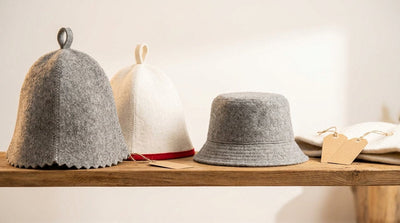
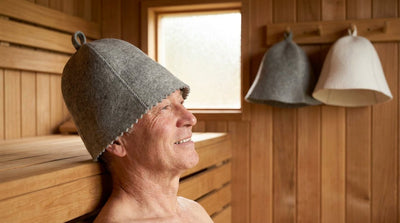
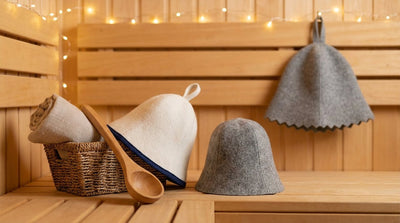
One thing that can sabotage a relaxing evening session: your head overheating before the rest of you is ready to leave. Heat rises, so in a sauna your head sits in the hottest layer of air — which is why seasoned bathers wear a felted wool hat. Wool is a surprisingly good insulator, so a wool sauna hat keeps your head noticeably cooler and helps you stay in comfortably for a full, unhurried session instead of bailing early with a flushed face. It also shields your hair from the dry heat — a real consideration if you're doing this several evenings a week. If you're curious about styles and fit, we've written guides to sauna hats for women and men alike.
Evening sauna: what helps, what hurts
| Helps sleep | Works against it |
|---|---|
| Finishing 1–2 hours before bed | Sauna right up until bedtime |
| Moderate heat, shorter rounds | Maximum-heat endurance sessions |
| Water or herbal tea afterward | Beer or wine in or after the sauna |
| Dim lights and a slow cool-down | Bright screens straight after |
| A consistent evening rhythm | Occasional, erratic late sessions |
A word on the alcohol row, because sauna culture and beer culture overlap more than doctors would like: alcohol both blunts sleep quality and adds real risk in the heat (dehydration, blood pressure swings). If sleep is the goal, save the drink for another night.
Who should check with a doctor first
Sauna is well tolerated by most healthy adults, but evening sessions raise heart rate and drop blood pressure just like daytime ones. If you're pregnant, have a heart condition, low blood pressure, or take medications that affect circulation or hydration, talk to your doctor before making evening sauna a habit. And if you ever feel dizzy or nauseated, leave the heat — no sleep benefit is worth pushing through that.
Give it two weeks
One evening sauna probably won't transform your sleep, and anyone who promises it will is selling something other than honesty. But the combination — a genuine thermal signal, a calmer nervous system, and a nightly ritual that ends with you warm, clean, and away from screens — stacks the odds pleasantly in your favor. Try three or four evening sessions a week for a couple of weeks, keep the timing consistent, and pay attention to how quickly you drift off. Worst case, you've spent a few quiet evenings sweating peacefully. There are worse experiments.
Made for the hot room
DIVELUX sauna hats are handmade from 100% natural wool felt — breathable, insulating and built to last. 7 colors, classic and bucket styles, $19.99 with free US shipping.
Shop Sauna Hats →