Bringing your kid into the sauna for the first time is a little like teaching them to swim: done thoughtfully, it becomes a lifelong ritual they'll thank you for; rushed, it's just a hot room and a cranky child. In much of Finland, kids grow up with sauna the way American kids grow up with backyard sprinklers — but Finnish parents also follow a quiet set of rules that make it work. Here's what those rules look like, why children need extra care around heat, and yes, why a tiny wool hat is more than just an adorable photo op.
Why Kids Aren't Just Small Adults in the Heat
Children's bodies handle heat differently than ours do, and the differences all point in the same direction: shorter, gentler sessions.
- More surface area, less mass. Kids have a higher skin-surface-to-body-weight ratio, which means they absorb heat from a hot environment faster than adults do, relative to their size.
- Less efficient sweating. Research suggests children's sweat response is less developed than an adult's, so their main cooling system runs at partial capacity.
- Faster dehydration. Smaller bodies have smaller fluid reserves. What's a mild thirst for you can be meaningful fluid loss for a five-year-old.
- They won't always tell you. A kid absorbed in playing with the ladle may not notice — or admit — that they feel dizzy or too hot. Adults self-regulate; children need someone regulating for them.
None of this means sauna is off-limits for kids. Finnish families routinely bring children from toddlerhood onward, and pediatric research from sauna cultures generally finds that healthy children tolerate short, moderate sessions well. It simply means the adult in the room carries the thermostat duty.
Age Guidelines: When and How Long
There's no single universal standard, but the customs from sauna-going countries converge on something like this:
| Age | Suggested approach | Session length |
|---|---|---|
| Under 2 | Generally skip it, or check with your pediatrician first | — |
| 2–6 | Lowest bench only, mild temps (140–160°F), adult always present | 3–5 minutes |
| 7–12 | Lower or middle bench, moderate temps, adult present | 5–10 minutes |
| Teens | Near-adult sessions, but teach them to exit at the first sign of dizziness | 10–15 minutes |
These are starting points, not finish lines. A happy, chatty kid at minute four is a success story — end on that note rather than pushing to minute eight. And if your child has any heart condition, epilepsy, fever, or other medical concern, talk to your pediatrician before the first visit. We're sauna people, not doctors.
The Golden Rules for Sauna Sessions with Kids
- Keep them low. Heat stratifies dramatically in a sauna — the top bench can be 30–40°F hotter than the bottom one. Kids sit low, full stop.
- Never leave them alone. Not for a minute, not to grab a towel. An adult stays inside with the child every time.
- Hydrate before, during breaks, and after. Water is perfect for kids; skip anything caffeinated. Our guide to what to drink before, during and after the sauna applies doubly to small bodies.
- Cool down gently. Save the ice plunge for the grown-ups. Kids do better with room-temperature air, a lukewarm shower, and a sit-down before any second round.
- Watch for the quiet signals. Flushed face beyond the normal rosy glow, drowsiness, headache complaints, or a suddenly quiet kid — any of these means the session is over, no negotiation.
- Let them lead. The fastest way to raise a lifelong sauna lover is to let them leave whenever they want. The fastest way to raise a sauna hater is to make them stay.
If your sauna sessions happen at a gym or spa rather than at home, check the facility's age policy first — many American spas have minimum ages — and brush up on sauna etiquette in American gyms and spas so the whole family makes a good impression.
Why a Sauna Hat Matters Even More on a Small Head
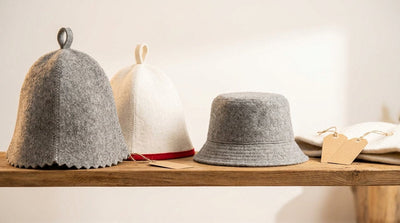
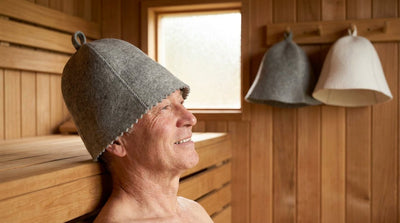
If you've read our blog before, you know the case for wool sauna hats: heat rises, your head sits in the hottest layer of air, and a felted wool hat insulates the scalp so your head stays cooler than the room while your body sweats away happily. For children, that logic gets amplified.
A child's head is proportionally larger relative to their body than an adult's — in toddlers, dramatically so. That means a bigger share of their heat exposure happens right at scalp level, in exactly the zone where sauna air is hottest. Thick wool felt is a genuinely good insulator (it's the same reason shepherds wore felt hats in both winter cold and summer sun), so a wool sauna hat may help keep a child's head noticeably cooler and make the whole experience more comfortable for them. It also shields fine kid-hair, which dries out easily in hot air.
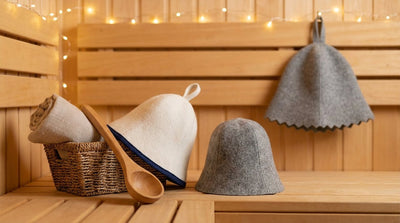
And honestly? The hat does something no thermometer can: it gives kids a ritual. A hat that's theirs, that goes on at the sauna door, turns the whole thing into an occasion. Sauna cultures have always understood that the accessories — the ladle, the hat, the venik whisk — are half of what makes the practice stick across generations.
Fitting a Hat on a Smaller Head
Most wool sauna hats, ours included, are one-size designs made for adult heads, and wool felt is forgiving — it has natural give and tends to settle onto whatever head it's given. On school-age kids and teens, an adult hat usually sits just fine, if charmingly oversized. For littler ones, a gentle fold of the brim or wearing it slightly back on the head does the trick. A too-big wool hat still insulates; think of it as a personal roof rather than a fitted garment. (A hat sliding over the eyes is also, according to every child we've observed, extremely funny.)
Which Sauna Type Is Kinder to Kids?
If you have a choice, traditional saunas at moderate settings are the well-trodden path — that's where centuries of family sauna culture live, and where the guidelines above come from. Infrared cabins run cooler (typically 110–140°F), which sounds kid-friendly, but there's far less research on children and infrared exposure specifically, so the same short-session caution applies. If you're weighing the two for a family setup, our honest comparison of infrared and traditional saunas walks through the differences.
Making It a Tradition, Not a Test
The families who succeed at raising sauna kids all seem to do the same things: they keep sessions short and cheerful, they bring water and a favorite towel, they let the child hold the ladle (supervised — steam is for grown-ups to manage), and they treat the cool-down snack as non-negotiable ceremony. The goal of a child's first sauna year isn't heat tolerance. It's the association: warmth, family, calm, and a funny wool hat that belongs to them. Get that right, and you've given them something they'll still be doing at eighty.
Made for the hot room
DIVELUX sauna hats are handmade from 100% natural wool felt — breathable, insulating and built to last. 7 colors, classic and bucket styles, $19.99 with free US shipping.
Shop Sauna Hats →