Every year a fresh wave of "best sauna hat" lists shows up, and most of them are affiliate roundups written by people who have clearly never sat on the top bench at 195°F. So we did it the old-fashioned way: we wore the hats. Wool, linen, cotton, the $6 marketplace specials, even a felt hat that arrived smelling faintly of glue. Here is our honest 2026 ranking, including where our own hats fall short.
How we ranked them
We judged every hat on the same five things, because "it looks cool" is not a category (though we admit it matters a little).
- Insulation: how much cooler your scalp feels compared to going bare-headed, especially in the first ten minutes when the ceiling heat is the most brutal.
- Breathability: whether the hat traps sweat and turns into a warm, damp sponge, or lets moisture pass through.
- Durability: how the hat looks after roughly forty sessions, including hand-washing and air-drying.
- Fit and comfort: does it stay put when you lean back, and does the brim keep sweat out of your eyes?
- Value: price versus how long the hat actually lasts.
A note on the health side. Research suggests that keeping your head cooler in a hot room may help you feel more comfortable and tolerate a longer session, but a hat is not a medical device, and no hat replaces listening to your body and stepping out when you need to. If you have a heart condition or are pregnant, talk to your doctor before you plan your sauna routine, hat or no hat.
The 2026 ranking at a glance
| Rank | Type | Insulation | Breathability | Durability | Typical price |
|---|---|---|---|---|---|
| 1 | Thick wool felt (handmade) | Excellent | Very good | Excellent | $20 to $45 |
| 2 | Thin wool felt (factory) | Good | Good | Fair | $10 to $20 |
| 3 | Linen | Fair | Excellent | Good | $15 to $30 |
| 4 | Cotton terry | Poor | Poor when wet | Good | $8 to $15 |
| 5 | Synthetic felt (budget) | Poor | Poor | Poor | $5 to $10 |
1. Thick wool felt: still the one to beat
We wanted to find a reason to dethrone wool this year. We could not. Dense, genuinely thick wool felt is the only material we tested that keeps the scalp noticeably cooler for a full session while still letting sweat evaporate instead of pooling. Wool fibers hold air, and air is a poor conductor of heat, which is the whole trick. It also seems to help with hair: several testers with long or color-treated hair said their ends felt less straw-like after a month of hatted sessions compared to their bare-headed habit. That is anecdotal, not a study, but it matches how wool behaves.
The caveat is that "wool" on a label does not guarantee thickness. We measured hats sold as "100% wool" that were barely thicker than a wool sweater, and they performed closer to linen. If you want to nerd out on density numbers, our felt thickness guide explains what to look for and how to check a hat with your fingers.
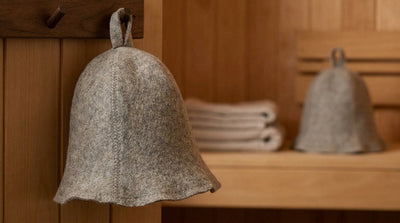
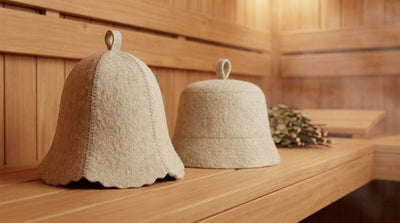
Best overall: a handmade, bell-shaped wool felt hat
The classic bell silhouette earned the top spot because it does two things well: it sits high enough to trap an insulating air pocket above your head, and it comes down over your ears and forehead, which is where most people feel the burn first. Our own wool sauna hat is in this category, and at $19.99 it is honestly on the cheap end for handmade felt, but we would give the same verdict to any well-made dense wool bell. Buy the one whose color you like.
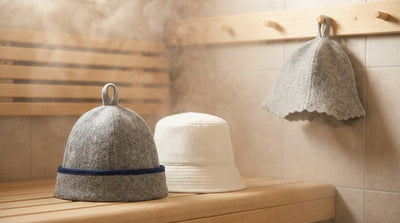
Best with a brim: the bucket-style wool hat
If sweat in the eyes is your nemesis, the bucket shape with a short brim is worth the trade. You give up a little of the air pocket on top and gain a drip edge that channels sweat down the sides. Testers who like to sit and read on the lower bench preferred it. Testers who prefer to lie down flat found the brim fiddly. Personal preference, plain and simple.
2. Thin factory wool felt: good, with an expiry date
Mass-produced wool hats are usually pressed thinner and often blended with a bit of polyester to help them hold shape on the line. They insulate well enough for a twenty-minute session and they are cheaper. The problem showed up around session twenty-five: two of the three we tested went limp, one developed a permanent fold, and the blended one started to feel oddly warm on top, likely because the synthetic share does not breathe. If you sauna once a month, this tier is perfectly reasonable. If you go twice a week, the math favors the thicker hat. We dug into the why in handmade vs factory sauna hats.
3. Linen: the summer favorite
Linen surprised us. It insulates only modestly, so it will not save you on the top bench of a screaming-hot Finnish sauna, but it breathes beautifully and dries fast. In a milder infrared cabin or a steam room, several testers actually reached for linen first because it felt lighter and less "wintry." The hats also wash easily and keep their shape. Our ranking assumes a traditional dry sauna, which is where linen loses points. For a 140°F infrared session, bump it up a place.
4. Cotton terry: a towel with ambitions
A cotton terry hat feels lovely for the first five minutes and then behaves like exactly what it is: a small towel on your head. Cotton absorbs sweat and holds it, and wet cotton conducts heat far better than dry wool, so by mid-session it can feel warmer than no hat at all. It is fine for a quick spa visit and a great choice for kids who will lose it anyway, but it is not a serious insulator.
5. Budget synthetic felt: the one we would skip
The $5 to $10 marketplace hats are almost always polyester or acrylic felt, and this is where our tone gets a bit less playful. Synthetics do not breathe, they trap heat against the scalp, and a couple of them gave off a faint chemical smell at temperature that we did not enjoy. One lost a visible amount of shape after a single wash. If a hat does not state its fiber content, assume synthetic. If you are wondering why the material matters so much more in a sauna than on a street, our piece on wearing a regular hat in the sauna covers the physics without the lecture.
How to pick the right one for you
- Hot, dry sauna at 180°F or above: thick wool felt, no contest. Bell shape for maximum insulation, bucket if sweat drips bother you.
- Infrared cabin or mild steam room: linen or thin wool. You want breathability more than serious insulation.
- Occasional spa visits: a thin wool hat is the sweet spot between price and performance.
- Kids and rentals: cotton terry, because it survives being sat on and forgotten.
- Anything unlabeled under $8: walk away, or at least check the fiber content first.
Whatever you choose, care for it the same way: rinse in cool water, squeeze gently, never wring, and let it dry on a jar or a bowl so it keeps its shape. A good wool hat treated like that will still be doing its job in 2027, which is more than we can say for most of the "best of 2026" lists.
Made for the hot room
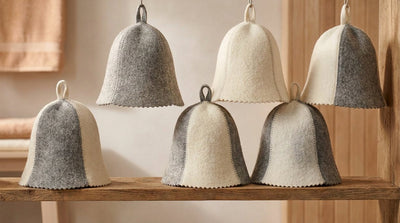
DIVELUX sauna hats are handmade from 100% natural wool felt — breathable, insulating and built to last. 7 colors, classic and bucket styles, $19.99 with free US shipping.
Shop Sauna Hats →