Ask ten people what a sauna hat should be made of and you'll get ten shrugs and one confident "wool, obviously." That one person is right, but "obviously" isn't an argument. So let's actually compare the contenders. Wool felt, linen, cotton and the various synthetics all get sold as sauna hats, and they behave very differently once the thermometer passes 180°F. Here's how they stack up, ranked from best to "please take that off."
What a sauna hat material actually has to do
Before ranking anything, it helps to be clear about the job. A sauna hat is not there to keep you warm. It's there to slow down how fast heat reaches your scalp, so your head stays noticeably cooler than the air around it. That lets you sit longer and more comfortably, and it may reduce the lightheaded, "I need to leave right now" feeling that comes from a hot head. It also shields your hair from direct dry heat, which can leave it brittle and frizzy over time.
So a good material needs four things:
- Low thermal conductivity. It should be a poor conductor of heat, ideally by trapping still air.
- Stable when wet. You will sweat into it, and it may get splashed. It should keep insulating when damp.
- Heat tolerance. No melting, no off-gassing, no strange smells at 195°F.
- Breathability. Some vapor needs to escape so you don't create a tiny personal greenhouse.
With those criteria in hand, the ranking almost writes itself.
1. Wool felt: the clear winner
Wool felt is what traditional Russian and Finnish sauna-goers have used for generations, and modern materials science mostly just confirms the folk wisdom. Wool fibers are crimped and hollow-ish, so felted wool is full of tiny air pockets. Still air is one of the best insulators around, which is why a thick wool felt hat can keep your scalp meaningfully cooler than the sauna air. If you want the details on how thickness changes that effect, we've written a separate guide on how thick a sauna hat should be.
Wool also has a trick the other fabrics lack: it keeps insulating when damp. The fiber can absorb a good amount of moisture into its structure without feeling wet or collapsing, so a sweaty wool hat still works. Research on wool textiles also suggests the fiber is naturally resistant to odor-causing bacteria, which is a polite way of saying your hat will smell fine for a long time between washes.
Heat tolerance is the easy part. Wool doesn't melt, chars only at temperatures far beyond any sauna, and won't shed chemical smells. A plain, undyed or naturally dyed wool sauna hat is about as inert as a piece of clothing gets.
The honest downsides
- It's warm on the walk in. Put it on inside the sauna, not in the changing room.
- Cheap wool blends can itch. Pure, well-felted wool is generally soft against the forehead.
- It needs gentle care: hand wash in cool water and air dry, or it may shrink.
2. Linen: a respectable second
Linen sauna hats are popular in some Baltic and Nordic traditions, and they're not a bad choice. Linen is heat tolerant, breathable, and pleasantly cool to touch. It also dries quickly, which is nice if you're rinsing it between rounds.
The problem is insulation. Linen is a dense, smooth fiber with very little trapped air, so a linen hat mostly blocks direct radiant heat from the stove rather than slowing heat transfer to your scalp. Think of it as shade rather than a thermos. For a mild sauna or a short session, that may be all you need. For a hot, dry Finnish-style room where you want to stay in for a proper sweat, wool does noticeably more.
Some makers combine the two: a wool felt body with a linen lining. That's a sensible pairing if you want wool's insulation with a cooler feel on the skin.
3. Cotton: fine in a pinch, not built for the job
Cotton is what most people reach for when they improvise. A cotton beanie, a folded towel, a baseball cap. It's heat safe and won't do anything alarming, but it fails the "stable when wet" test badly. Cotton soaks up sweat, holds it against your head, and once it's wet it conducts heat far better than when dry. A damp cotton cap in a hot room can end up feeling like a warm compress, which is the opposite of what you want.
Cotton also has almost no loft. There's little trapped air in a woven or knit cotton fabric, so its insulating value is modest to begin with. If a cotton hat is all you have, it's better than nothing. We dug into the whole "just wear a normal hat" question in this article on regular hats in the sauna, and the short version is that the material matters more than the shape.
4. Synthetics: last place, and it's not close
Polyester, acrylic, nylon and polyester fleece all show up in bargain "sauna hats," usually the multipack kind. On paper, fleece even looks like it should work: it's lofty and traps air. In a sauna, though, synthetics have real problems.
- Heat. Most common synthetics soften somewhere between 300°F and 500°F. A sauna won't get there, but a hat brushing a hot stove guard or sitting on the top bench next to the stones can get uncomfortably close. Plastic-y smells at high heat are also common, and you're breathing that.
- Sweat. Synthetics don't absorb moisture, so sweat pools on the surface and drips. They're also known for holding onto odor, which a hot, humid environment makes worse.
- Feel. Wet plastic on a hot forehead is nobody's idea of relaxation.
Synthetic hats are cheap for a reason. If you're weighing a wool hat against a three-pack of fleece ones, our brand comparison walks through what you actually get for the price difference.
The scorecard
| Material | Insulation | Works when damp | Heat safe | Breathable | Verdict |
|---|---|---|---|---|---|
| Wool felt | Excellent | Yes | Yes | Good | Best choice |
| Linen | Low to moderate | Mostly | Yes | Excellent | Good for mild saunas |
| Cotton | Low | No | Yes | Good | Emergency only |
| Synthetics | Varies | No | Marginal | Poor | Skip it |
A few things the label won't tell you
"100% wool" on a tag is a start, not a guarantee. Two things matter almost as much as the fiber itself.
- How well it's felted. Loosely felted wool is floppy and lets heat through. Dense, evenly felted wool holds its shape, holds more still air, and lasts years. Handmade felting tends to produce more consistent density than fast factory pressing, and we've compared the two honestly in handmade versus factory sauna hats.
- What's mixed in. Some "wool" hats are wool blended with polyester for cost. That reintroduces the synthetic problems above. Look for wool felt with no listed blend.
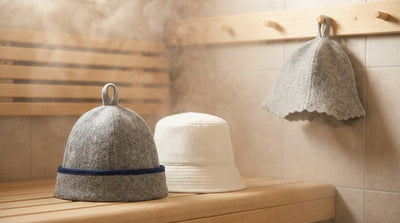
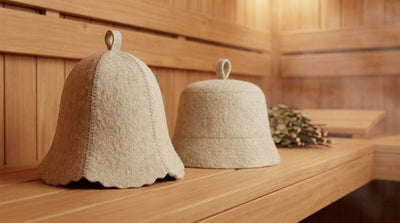
Shape is a matter of taste. A classic bell covers the ears and forehead generously, while a brimmed bucket style adds a little extra shade for your eyes on the top bench. Both do the same job if the felt is good.
The short answer
If you want one material and don't want to think about it again: wool felt. Linen is a fair alternative for gentler saunas or for people who find wool too warm. Cotton is a stopgap. Synthetics are the one category worth actively avoiding in a hot room. Whichever you pick, put it on once you're inside, keep it dry between rounds when you can, and enjoy the extra few minutes it buys you on the bench.
Made for the hot room
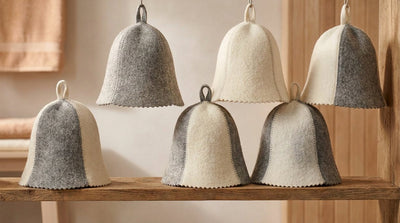
DIVELUX sauna hats are handmade from 100% natural wool felt — breathable, insulating and built to last. 7 colors, classic and bucket styles, $19.99 with free US shipping.
Shop Sauna Hats →